COVID-19 Easy Share Resources
We recognise that different people use different ways to communicate that aren’t always out there for everyone to see.
With everyone spending more time at home, messaging and calling people has become our main way of contacting friends and loved ones.
We’ve developed some short, easy to share messages that you can share via a chosen messaging platform (WhatsApp, Facebook, Text) or over the telephone. Whether you’re an organisation or an individual, this is a great way to show someone that support is available and that they are not alone.
For those who are more tech savvy you could also use this to create twitter fleets, Facebook and Instagram stories or as general social media posts.
However you want to use them is up to you. The most important thing is getting the message out there and ensuring people can access the help they need.
Instructions
Below we’ve provided advice on how to share these messages directly from this web page, using the device of your choice.
Computer/Laptop
- Step 1 (optional): If required, change the language of the text using the ReciteMe function.
- Step 2: Right click image. Save image.
- Step 3: Highlight text. Right click on highlighted text. Copy text.
- Step 4: Open chosen messenger platform. Add saved images. Right click in chat bar and paste text.
- Step 5: Check for any errors or edit text if relevant.
- Step 6: Send message.
Mobile/tablet
- Step 1 (optional): If required, change the language of the text using the ReciteMe function.
- Step 2: Hold image. Add to photos.
- Step 3: Highlight text. Tap on highlighted text. Copy text.
- Step 4: Open chosen messenger platform. Add saved images. Tap chat bar and paste text.
- Step 5: Check for any errors or edit text if relevant.
- Step 6: Send message.
Messages
Below are a series of coronavirus messages that can be shared across multiple platforms. For your convenience they have been split up into different categories that you can click on below.
COVID-19 Vaccination - Safety and Efficacy
| Theme | Message | Image |
| Side effects |
Research from the Medicines and Healthcare products Regulatory Agency (MHRA) shows Covid-19 vaccines are extremely safe. Side effects can happen, but for most people they are mild and go away within a few days. More information at https://phw.nhs.wales/covid-19-vaccination Please share these facts with family and friends. |
|
| Side effects |
Side effects can occur from the Covid-19 vaccination, these are normally mild and are your body’s normal immune response to the vaccine. These might include having a sore arm, a headache, feeling tired, chills, aching muscles or some flu-like symptoms. Please share these facts with family and friends. |
|
|
Severe Side effects |
Side effects can occur from the Covid-19 vaccination, these are normally mild and are your body’s normal immune response to the vaccine. Severe allergic reactions to the Pfizer/BioNTech vaccine are proven very rare. More information at https://phw.nhs.wales/covid-19-vaccination Please share these facts with family and friends. |
|
|
Efficacy |
Having your vaccine is the single most effective way to reduce death and severe illness from COVID-19. Evidence shows the expected benefits in vaccines preventing COVID-19 and its serious complications outweigh any known side effects. More information here https://phw.nhs.wales/covid-19-vaccination Please share these facts with family and friends. |
|
| Safety |
Overwhelming evidence shows that having your vaccine is much safer than not getting vaccinated. To date, no other new safety concerns have been identified from the Medicines and Healthcare products Regulatory Agency (MHRA) Please share these facts with your contacts. More information at https://phw.nhs.wales/covid-19-vaccination |
|
Oxford AstraZeneca
| Theme | Message | Image |
|
AZ the risks explained |
Update on Oxford AstraZeneca vaccine. It’s been confirmed that blood clots are a rare but possible side effect of the Oxford AstraZeneca vaccine. The expert scientific advice remains strongly in favour of vaccination with the AstraZeneca vaccine for those aged 30 and over This is the same for those aged under 30 who have underlying health conditions which puts them at higher risk of severe outcomes from COVID-19 infection. However, JCVI advise that adults aged 18-29 years old who do not have underlying health conditions should be offered an alternative vaccine. Health Boards in Wales will be offering alternative vaccines to this group, while continuing to offer all available vaccines at all other ages. For more information visit: https://phw.nhs.wales/news/public-health-wales-statement-on-safety-concerns-with-astrazeneca-covid-19-vaccine/ |
|
|
AZ Dr Richard Roberts |
Update on Oxford AstraZeneca vaccine. “The risk of experiencing this very rare side effect is extremely low and the risk benefit in comparison to contracting COVID-19 disease is still clearly in favour of vaccination for the vast majority of adults. “The risk of dying from a rare blood clot event after receiving an AstraZeneca vaccine is around one per million. “ Dr Richard Roberts, Head of the Vaccine Preventable Diseases Programme at PHW, on the risk of rare blood clots following the AZ vaccine. For more information visit: https://phw.nhs.wales/news/public-health-wales-statement-on-safety-concerns-with-astrazeneca-covid-19-vaccine/ |
|
|
AZ blood clot symptoms |
Update on Oxford AstraZeneca vaccine. “The risk of experiencing this very rare side effect is extremely low and the risk benefit in comparison to contracting COVID-19 disease is still clearly in favour of vaccination” - Dr Richard Roberts, Head of the Vaccine Preventable Diseases Programme at PHW After having the Oxford AstraZeneca vaccine you should seek medical care promptly if you have:
For more information visit: https://phw.nhs.wales/news/public-health-wales-statement-on-safety-concerns-with-astrazeneca-covid-19-vaccine/ |
|
|
AZ Easy explainer |
Update on Oxford AstraZeneca vaccine. Experts have said that blood clots are a possible side effect of the Oxford AstraZeneca vaccine. However this is very rare which means the chances of you experiencing one are very small. If you are 30 and over you can still have this vaccine. If you are under 30 but have another illness that puts you at risk of COVID-19 you can still have this vaccine. If you are 18-29 and do not have another illness you will be offered a different COVID-19 vaccine. You can find more information here: https://phw.nhs.wales/news/public-health-wales-statement-on-safety-concerns-with-astrazeneca-covid-19-vaccine/ |
|
COVID-19 Vaccination - Phase 2
| Theme | Message | Image |
|
Priority Phase 2 Age groups |
Who will be invited for their vaccine next? The Joint Committee on Vaccination and Immunisation (JCVI) has advised that people should continue to be prioritised by age for Phase 2 of the Covid-19 vaccine rollout. This will help prevent more people going to hospital and deaths due to COVID -19, and will start in Wales from mid April. Covid-19 Vaccination Priority Phase 2:
If you are in these groups, please wait to be invited for vaccination. Please share. More information at https://phw.nhs.wales/covid-19-vaccination |
|
|
Priority Phase 2 Age groups |
The Joint Committee on Vaccination and Immunisation (JCVI) has advised that people should continue to be prioritised by age and will begin from mid-April. After Phase 1, people aged 40 to 49 years are at highest risk of being admitted to hospital, with the risk reducing the younger you are. Covid-19 Vaccination Priority Phase 2:
If you are in these groups, please wait to be invited for vaccination. More information at https://phw.nhs.wales/covid-19-vaccination |
|
|
Priority Phase 2 Age groups |
Having the Covid-19 vaccine is one of the best ways to protect you, your loved ones and your community from Coronavirus. It is really important that anyone eligible gets both doses offered for further protection The next phase (phase 2) will begin from mid-April and continue in priority by age. Covid-19 Vaccination Priority Phase 2:
If you are in these groups, please wait to be invited for vaccination. Please share. More information here https://phw.nhs.wales/covid-19-vaccination |
|
|
Priority Phase 2 Not received an invite |
If you think you should have received a vaccine invite but have not please do not worry. Your vaccine invite will be sent by your health board or your employer. You can find out how to contact your health board about this via the link below: https://gov.wales/get-your-covid-19-vaccination-if-you-think-you-have-been-missed |
|
|
Second doses |
Second doses of COVID-19 vaccines are now being given. It is really important that anyone eligible gets both doses offered for further protection Just like the first dose, you will be invited to an appointment for your second dose. More information here https://phw.nhs.wales/covid-19-vaccination Please share. |
|
Ramadan
| Theme | Message | Image |
|
Not breaking your fast |
Ramadan is upon us and we hope that you are able to observe safely over the next month. British Islamic Medical Association (BIMA) along with Islamic scholars advise that having a COVID-19 vaccine does not invalidate the fast and individuals should not delay vaccinations during Ramadan. BIMA also advises that taking a lateral flow or PCR test will not invalidate the fast. Find more guidance from BIMA here: https://britishima.org/operation-vaccination/hub/statements/?fbclid=IwAR3Cp_Jxfmib9gadKaW_qQl9Chohl2DH8WmXCYczSubStj8R1GlsJlQuHIU#FAST |
|
| Vaccination during Ramadan |
Ramadan Kareem. Working with the British Islamic Medical Association (BIMA) in Wales, we can advise that having a COVID-19 vaccination does not invalidate the fast. This is supported by many Islamic scholars. If you are invited for COVID-19 vaccination during Ramadan, you should have it. Please do not delay protecting yourself, your family and those most at risk against COVID-19. After having your vaccine please continue to follow government guidelines to reduce the spread of COVID-19 and help save lives. |
|
|
Following guidance during Ramadan |
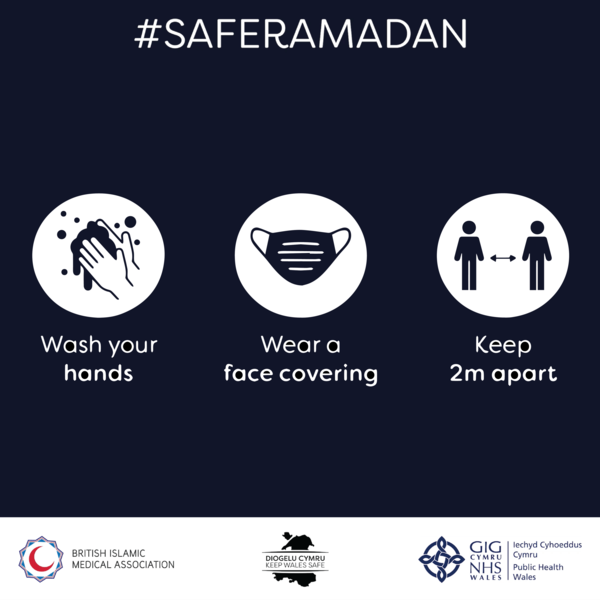
Ramadan Mubarak. This year, Ramadan will again be different. Keeping physically distance from loved ones will be challenging, but by continuing to follow the guidelines you can help keep yourself, your family and your community safe. For advice from the British Islamic Medical Association go here: https://britishima.org/saferamadan/ |
|
|
Meeting others during Ramadan |
This Ramadan, remember to celebrate in a way that is safe for yourself, your family and your community. Please don’t mix indoors with anyone you don’t live with. If you choose to meet loved ones outside, make sure you
Tips on enjoying a safe Ramadan from the British Islamic Medical Association can be found here: https://britishima.org/saferamadan/ |
|
|
Stay safe throughout Ramadan |
Ramadan Mubarak. Throughout the holy month, stay connected with the people you care about in a way that won't put you or them at risk. For tips from the British Islamic Medical Association on observing a Safe Ramadan visit: https://britishima.org/saferamadan/ |
|
|
Thank you |
Eid Mubarak to those who have observed the month of Ramadan. Thank you to our partners British Islamic Medical Association (BIMA) in Wales for helping to provide information on COVID-19 vaccination and observing Ramadan safely. Please remember that it is very important to have a COVID-19 vaccine when are you are invited for it. It will help protect you, your family and those most at risk against COVID-19. After having your vaccine please continue to follow government guidelines to reduce the spread of COVID-19 and help save lives. https://britishima.org/operation-vaccination/hub/statements/#FAST |
|
Shop Safely
| Theme | Message | Image |
|
Help stop the spread |
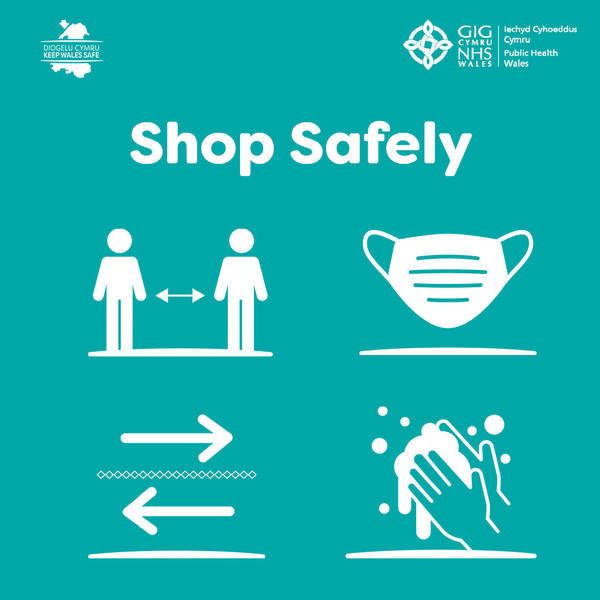
As the shops we love begin to reopen, we need your help to stop the spread of Coronavirus. When shopping, make sure to: - wear a face covering - keep two metres apart - follow in-store safety measures - wash or sanitise your hands regularly Together we can keep our communities safe |
|
| Keep yourself and others safe |
Heading to the shops? Don’t bring Coronavirus home with you! Protect yourself and others by following public health guidelines and in-store safety measures: - wear a face covering - keep two metres apart - only go to the shops with people from your household - wash or sanitise your hands regularly Together we can keep our communities safe |
|
|
Coronavirus hasn’t gone away |
Many of the shops we love have reopened, but Coronavirus hasn’t gone away. Protect yourself and others by following public health guidelines and in-store safety measures: - wear a face covering - keep two metres apart - only go to the shops with people from your household - wash or sanitise your hands regularly Together we can keep our communities safe |
|
Return to School
| Theme | Message | Image |
|
Don’t go to school when unwell |
As all remaining children in Wales return to school, we need your help to limit the spread of Coronavirus. Please don’t send your child to school if they are unwell, even if you don’t think it’s Coronavirus. By following the guidelines we can help ensure our schools stay open and that our children can continue to learn and connect with friends |
|
|
Do not mix indoors outside of school |
Please don’t invite your children’s friends or parents inside your home, even if they are in the same bubble at school. Schools are controlled environments with measures in place to keep children and adults safe. By following the guidelines we can help ensure our schools stay open and that our children can continue to learn and connect with friends |
|