
Your baby has a hearing loss
Version 9, September 2024
What is a hearing loss?
A hearing loss is when your ability to hear is reduced.
It happens when one or more parts of the ear are not working effectively.
It is very unlikely that your baby will not be able to hear any sounds at all.
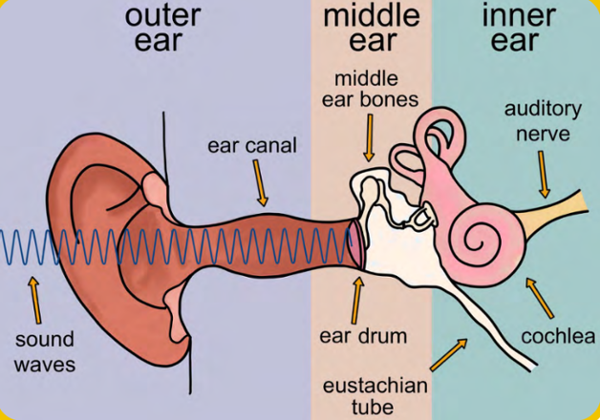
There are diferent levels of hearing. The terms ‘D/deaf’, ‘hearing impaired’ and ‘hard of hearing’ are also used where a hearing loss is found.
Deaf with a capital ‘D’ refers to people who identify with Deaf culture as part of the Deaf community and tend to communicate in British Sign Language. deaf with a small ‘d’ refers to hearing status generally. D/deaf is inclusive of both.
Levels of hearing loss
Mild
This is when a person may hear some speech sounds but quiet sounds are hard to hear.
Moderate
This is when a person will not hear everything that is being said by another person talking at a normal level.
Severe
This is when a person will not hear any speech when another person is talking at a normal level and only some loud sounds.
Profound
This is when a person will not hear any speech and only very loud sounds.
Your audiologist will be able to explain which sounds your baby can hear and which sounds they have difficulty hearing. It is unlikely that your baby will not be able to hear any sounds at all.
Causes of hearing loss
There are different types of hearing loss. The type of hearing loss your baby has depends on where the problem is in the ear.
Sensorial hearing loss
This is when there is a problem in the inner ear (cochlea) or hearing nerve. This is a permanent hearing loss.
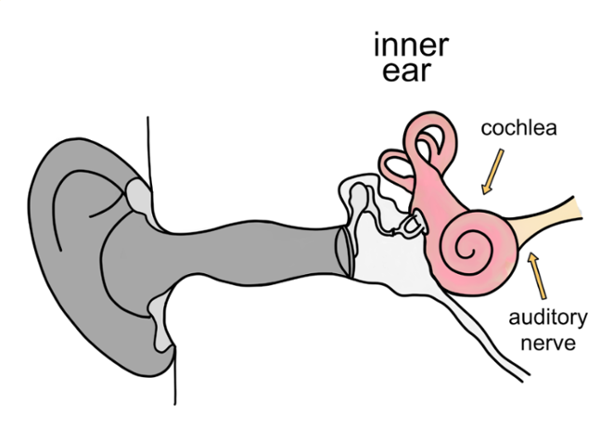
Most babies with this type of hearing loss are born into families where no one else is affected. In some families the hearing loss may be inherited (passed down from parents to their children).
Sensorineural hearing loss may also be caused by:
- infections during pregnancy;
- premature birth and complications at birth;
- another condition or be linked to other difficulties; or
- childhood illnesses such as mumps, measles or meningitis.
Conductive hearing loss
This is when sound cannot easily travel through the ear. For most babies, this type of hearing loss does not last or might come and go over time. In some babies, the hearing loss will not get better.
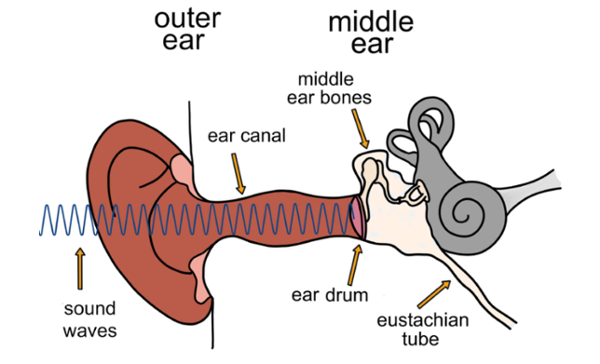
This hearing loss is usually caused by fluid in the middleear. This is known as glue ear. This is a very common and often treatable condition. Sometimes it may be caused by problems with the development of the outer and middle ear.
Children with sensorineural hearing loss can also have a temporary conductive hearing loss.
You can talk with the specialist doctor (a doctor who has more in depth knowledge of children’s hearing). They will work with your audiologist to find the ause of your baby’s hearing loss. For some babies and children, it may not be possible to find the ause of their hearing loss.
Hearing aids
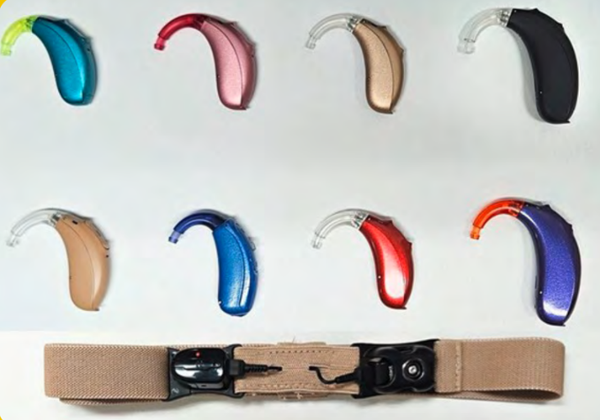
An audiologist may tell you that hearing aids will help your baby to hear better.
If you choose to have hearing aids for your baby, a special mould of your baby’s ear will be made. You will be given another appointment to have the hearing aids fitted.
The audiologist will give you advice about the best way to use your baby’s hearing aids.
They will not be painful or uncomfortable for your baby to wear. You will be offered regular checks of your baby’s hearing and the hearing aids.
Support for you and your baby
This can be a worrying time. You can talk to the Early Years Support Team, who will be able to answer any questions you have. This team includes:
- an audiologist;
- a specialist teacher (who is qualified to teach children with a hearing loss);
- a specialist doctor; and
- a speech and language therapist and maybe a social worker.
The team will meet with you regularly to discuss what support you and your baby may need.
Going to school
Most children with a hearing loss go to mainstream schools. Some children may go to schools which have specialist support for children with a hearing loss. A specialist teacher will make sure that your child’s needs are met.
Communication
Children with a hearing loss and their families communicate in different ways. Some children will learn to use:
- speech;
- sign language; or
- a mixture of both.
A specialist teacher and other members of the Early Years Support Team will help you choose the best way for you and your baby to communicate.
It is very important to communicate with your baby as much as possible.
Further support
There may be other support available to help you care for your baby. This includes financial support.
The Early Years Support Team, the National Deaf Children’s Society, the Department for Work and Pensions or Citizens Advice will be able to give you more information.