

Evaluation of the Warm Wales Fuel Poverty Programme
Background
Poor‑quality housing is a significant public health issue in Wales, estimated to cost around £1 billion each year (1) and contributing to a wide range of adverse health outcomes (2,3). Homes that are difficult or expensive to heat are linked to physical and mental health problems, including respiratory and cardiovascular conditions, as well as increased pressure on health and care services. Fuel poverty—affecting around one in four households in Wales (4), arises when people cannot afford to keep their homes adequately warm (2), with potentially serious consequences for physical and mental wellbeing, financial security and quality of life (3,5,6). While housing energy efficiency plays an important role in being able to keep homes warm, fuel poverty is shaped by a broader set of factors, including income, rising living costs (7,8), insecure employment, and long-term health conditions (9,10).
Programmes such as Warm Wales contribute to efforts to eliminate severe and persistent fuel poverty (11) by supporting households most at risk. Warm Wales provides tailored, person-centred support through a social prescribing model, helping households reduce energy costs, maximise income, and access wider health and wellbeing services (12). There is a growing need to better understand how housing and health interact—and how social prescribing interventions like Warm Wales can improve outcomes for individuals and communities.
This evaluation report, produced by the Networked Data Lab (NDL) Wales and the Central Evaluation Team at Public Health Wales, examines the impact of housing energy efficiency and Warm Wales support on health service use in Wales using linked data. It also includes a process evaluation to understand how the service is delivered, barriers and facilitators to accessing the service, and the difference it makes for individuals receiving support and partner organisations.
NDL Wales is a partnership between Public Health Wales, Digital Health and Care Wales, Swansea University, and Social Care Wales. It is one of five analytical teams funded by the Health Foundation to investigate issues in health and care services (13).
This evaluation was delivered in collaboration with Warm Wales staff, service users, and partner organisations. The contribution of community stakeholders and referral partners was essential to both service delivery and the evaluation process.
All linked data analysis took place in the SAIL (Secure Anonymised Information Linkage) Databank’s Trusted Research Environment (TRE) (14–16). SAIL analyses were approved by the SAIL independent Information Governance Review Panel (IGRP) – SAIL approved project 1873.
Key findings
Energy efficiency in Wales
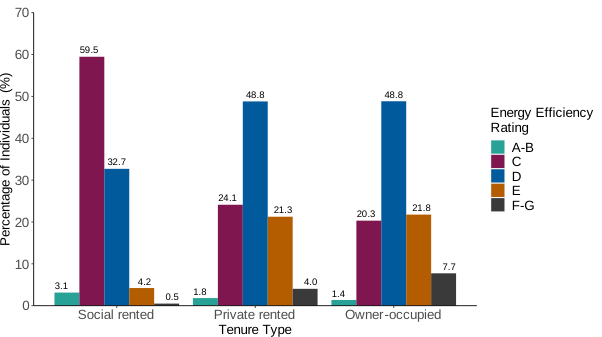
Energy efficiency varied across housing and household characteristics, particularly tenure. Social rented homes were generally more energy efficient than private rented or owner-occupied homes.
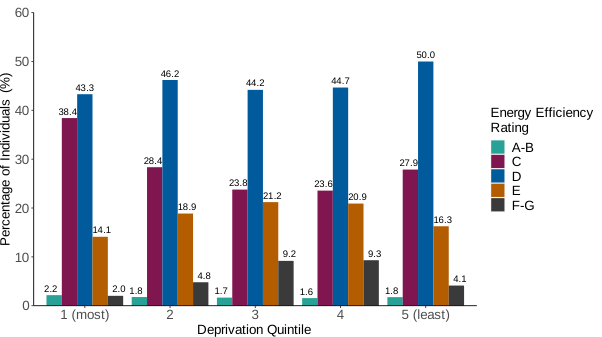
Energy efficiency also varied by deprivation and rurality, showing that energy efficiency is shaped by wider housing patterns and should not be treated as a direct measure of fuel poverty.
Who received Warm Wales support?
Warm Wales is a Welsh charity that aims to provide homes with affordable warmth and alleviate fuel poverty by offering free advice and support through a social prescribing model.
Warm Wales provided us with data covering 2021-2023, comprising approximately 2,200 records. Of these, approximately 90% could be linked with wider data within the SAIL Databank. After pulling in all individuals resident in households at the time support was received, and applying our study-specific inclusion criteria, we included 2,290 individuals who had received support from Warm Wales during this period.
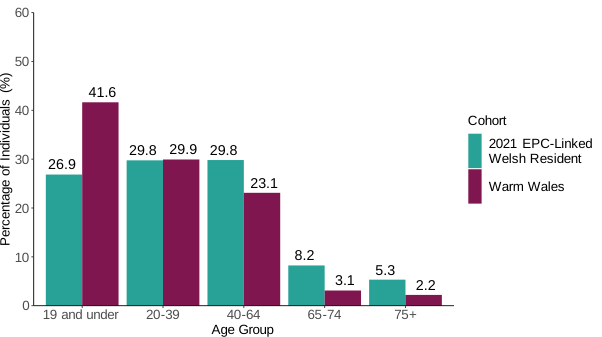
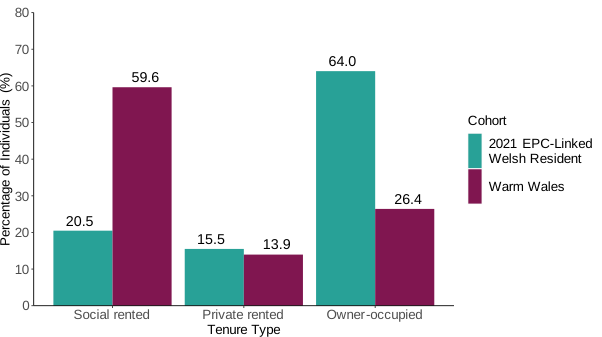
We found that Warm Wales recipients were more likely to live in more deprived areas and social rented housing. Recipients were younger than the 2021 EPC-linked Welsh resident cohort and were more likely to live in households with adults and children, reflecting the high proportion of families supported by Warm Wales.
Over half of Warm Wales recipients lived in homes with above-average energy efficiency, while around 1 in 10 lived in homes with below-average energy efficiency. This reinforces that fuel poverty is not shaped by energy efficiency alone.
Impact of Warm Wales
One aim of this study was to explore if it was feasible to link anonymised data from Warm Wales recipients with routine healthcare records to understand if the support provided had an impact on healthcare activity. We were able to link almost all individuals in our Warm Wales cohort to healthcare data; however, it was not possible to identify GP attendances for conditions specifically related to cold homes due to data quality.
Therefore, we were only able to explore total interactions with a GP practice, which included consultations, prescriptions and administrative events. In this analysis we found that those who received Warm Wales support showed a reduction in total GP interactions, compared to similar individuals who did not receive Warm Wales support. However, given that total GP interactions were not condition-specific, any observed differences cannot be confidently linked to health impacts arising from Warm Wales support.
We also explored whether it was feasible to examine the impact on hospital stays. Again, it was possible to link the anonymised data; however, hospital stays were relatively uncommon during the study period, so evidence for any change in inpatient hospital use was limited and uncertain.
Implementation and delivery
Warm Wales was viewed positively by staff, service users and partners. Respondents reflected on its flexible, person-centred approach, strong relationships and partnership working as key strengths. Delivery was also shaped by capacity and funding pressures, gaps in provision, delays or missed contact, and challenges coordinating support across services.
Reported changes for service users
Most Significant Change stories and qualitative interviews suggested that Warm Wales support contributed to meaningful improvements for some service users, including reduced financial pressure, greater confidence managing bills and accessing support, improved mental wellbeing through reduced stress, and improved comfort linked to being able to keep warm at home. These findings are based on a small, purposively selected sample and as such may not reflect the experiences of everyone who received Warm Wales support.
Conclusion
Overall, the evaluation suggests that Warm Wales is reaching households experiencing fuel poverty. The findings show that energy efficiency rating alone may not capture those experiencing fuel poverty, and that practical, financial and person-centred support may help reduce stress and recorded GP interactions for some recipients.
Background
Using mixed-methods to understand the implementation and impact of Warm Wales
In Wales, poor-quality housing is estimated to cost society around £1 billion each year (1). The condition of people’s homes plays an important role in shaping health, contributing to inequalities and a range of adverse outcomes, including cardiovascular disease, respiratory conditions, and poor mental health (2,3). These impacts are often worse in homes that are hard or costly to keep warm, especially during the ongoing cost of living crisis.
Fuel poverty remains a significant public health issue in Wales, affecting around one in four households (4). It occurs when households cannot afford to keep their homes adequately warm (2), and is linked to a wide range of adverse outcomes, including respiratory and cardiovascular conditions, increased risk of falls, poorer nutrition, and impacts on mental health and wellbeing (3,5,6). Cold homes can also contribute to excess winter mortality and place additional pressure on health and care services (6,17,18).
Housing quality plays a central role in fuel poverty. The energy efficiency of a home—shaped by factors such as its age, construction, and heating system—determines how easy and affordable it is to keep warm. In Wales, a household is defined as being in fuel poverty if it would need to spend more than 10% of its income on heating to a satisfactory level. This means that poorer-quality housing can increase energy needs and costs, making fuel poverty more likely (4).
However, fuel poverty is not driven by housing conditions alone. It reflects a wider set of structural factors, such as low income, rising living costs (7,8), insecure employment, and long-term health conditions (9,10). Together, these factors limit people’s ability to meet basic needs, with serious consequences for health, wellbeing and quality of life (6,18,19).
In alignment with an effort to eliminate fuel poverty in Wales (11), community-based initiatives, such as Warm Wales, have been developed to support households most at risk. Using a social prescribing model (20), the programmes delivered by Warm Wales go beyond physical improvements to homes by helping people reduce utility bills and energy costs, make better use of energy, maximise household income, and access wider services that address health and wellbeing needs. Through this tailored, person-centred support, Warm Wales aims to reduce fuel poverty and improve wellbeing by helping households stay warm, reduce financial stress and access practical support (12).
With rates of fuel poverty rising and housing conditions continuing to affect health, there is a clear need to better understand how these factors interact – and how social prescribing interventions like Warm Wales, which combine practical support with wider social and health-focused approaches, can improve outcomes for individuals and communities.
About this study
What did we want to understand?
This study aimed to evaluate the impact of energy efficiency and Warm Wales support on health service use in Wales, using population-scale linked data from the SAIL Databank (14–16). In addition, a process evaluation was conducted to understand how Warm Wales services are delivered, and what difference they make for individuals receiving support and partner organisations using the RE-AIM Framework (21).
What did we do?
The evaluation adopted a mixed-methods approach, structured around two complementary work streams: a linked data analysis and a process evaluation, incorporating both quantitative and qualitative components.
Workstream 1: Linked Data Analysis (Quantitative)
The quantitative analysis linked individual-level population-scale, anonymised, routinely collected electronic health records (EHRs) and administrative data sources within the SAIL Databank.
Two non-discrete cohorts were created:
- 2021 EPC-linked Welsh resident cohort (N = 1,228,944): all people living in Wales on Census Day 2021 who had a valid EPC record available and met the study inclusion criteria (see supporting methodology). As not all homes had a valid EPC, this cohort may not be representative of the whole Welsh population at this time.
- Warm Wales cohort (N = 2,290): all people who received Warm Wales support between 1 January 2021 and 31 December 2023 who had a valid EPC record and met the study inclusion criteria (see supporting methodology).
To help understand whether Warm Wales support was linked with changes in health service use, we compared people who received support with a similar group of people who had not received Warm Wales support. Warm Wales recipients were matched to individuals who did not receive support from Warm Wales, but had similar characteristics, such as age, sex, area-level deprivation, rurality, housing tenure, EPC rating and previous health service use. We then compared how health service use changed before and after Warm Wales support in the two groups. Full details can be found in the supporting methodology.
Workstream 2: Process Evaluation (Qualitative)
The qualitative analysis comprised a process evaluation drawing on multiple data sources to understand how Warm Wales was delivered, the difference it made for individuals receiving support and partner organisations, and the outcomes reported by recipients.
RE-AIM framework was used to explore:
- Reach: Understand who is accessing the service, and barriers and facilitators to engagement with the service
- Effectiveness: The extent to which the service contributes to and improves fuel poverty and self-perceived wellbeing outcomes
- Adoption: How partner organisations engage with and support delivery of various aspects of Warm Wales
- Implementation: How the service is delivered in practice and its acceptability
- Maintenance: Whether outcomes are sustained over time and understand the conditions that support long-term integration
Data were collected from:
- In-depth qualitative interviews with recipients of Warm Wales support (n=6), one non‑recipient (n=1), Warm Wales staff (n=4), and partner organisation representatives (n=2). A total of 13 interviews were conducted between November and December 2025.
- Most Significant Change (MSC) stories (23) collected from six recipients of Warm Wales support, capturing perceived impacts and changes experienced following support.
Participants were recruited using purposive sampling. Due to recruitment challenges, the sample size was small and findings should be interpreted with caution (24).
Data were analysed thematically to explore experiences of the service users, staff and partner organisations and reported changes in fuel poverty, health and wellbeing, and the contribution of Warm Wales support. Findings were structured using the RE‑AIM framework (21).
How energy efficient are Welsh homes?
Energy efficiency varied across housing and household characteristics
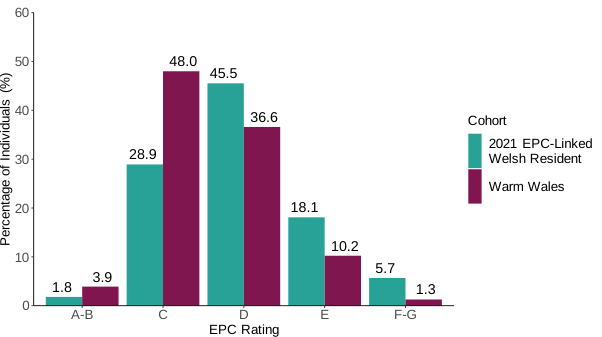
Using the 2021 EPC-linked Welsh resident cohort (N=1,228,944), the most common energy efficiency rating in Wales in 2021 was Band D (45.5%). The highest (Band A-B) and lowest (Band F-G) ends of the rating scale were relatively uncommon, accounting for 1.8% and 5.7% of individuals respectively.
Energy efficiency varied markedly by tenure, with social rented homes generally more energy efficient than private rented or owner-occupied homes (Figure 1). This likely reflects differences in regulatory standards, which are stricter for social housing than for private rented or owner-occupied homes (25,26).
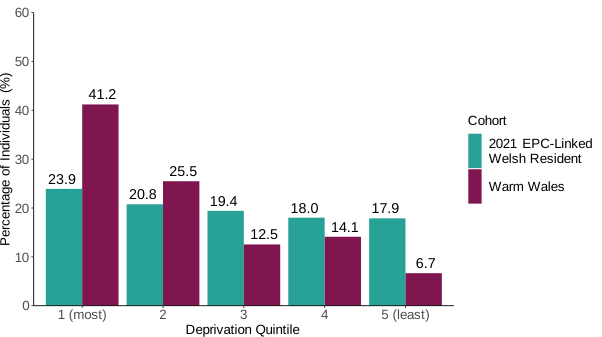
Energy efficiency also varied by area-level deprivation and rurality. People living in more deprived areas were more likely to live in relatively energy-efficient homes (Figure 2), which may reflect the higher concentration of social rented housing in these areas. In contrast, individuals in rural areas were more likely to live in less energy-efficient homes, with 36.0% below the Band D average compared with 19.2% in urban areas. This likely reflects factors such as older housing stock, limited access to mains gas, and a higher prevalence of owner‑occupied homes.
Overall, these findings show that energy efficiency rating varies by housing tenure and wider household characteristics. The rating is therefore useful for describing the physical efficiency of homes, but it should not be interpreted as a direct measure of fuel poverty. A household may live in a relatively energy-efficient home and still struggle to afford adequate warmth.
Who received support from Warm Wales?
Between January 2021 and December 2023, our Warm Wales cohort included 2,290 people.
People receiving support from Warm Wales were younger than the 2021 EPC-linked Welsh resident cohort
People receiving Warm Wales support were younger than the 2021 EPC-linked Welsh resident cohort (Figure 2). Most people receiving Warm Wales support (70.4%) lived in households with both adults and children, compared with 50.5% of the 2021 EPC-linked Welsh resident cohort. These patterns may suggest higher demand among families with children, though they may also reflect scheme targeting, data limitations, and/or unmet need among older people and households without children.
Housing characteristics of those receiving Warm Wales support
Most people receiving Warm Wales support lived in social rented homes (59.6%) and in more deprived areas (41.2%). In comparison with the 2021 EPC-linked Welsh resident cohort, those in owner-occupied homes (Figure 3) and those living in the least deprived areas (Figure 4) were under-represented.
Over half of Warm Wales recipients lived in homes with above-average energy efficiency, defined as EPC Bands A–C, compared with 30.7% of the 2021 EPC-linked Welsh resident cohort. Around 1 in 10 Warm Wales recipients lived in homes with below-average energy efficiency, defined as EPC Bands E–G.
This may reflect the high proportion of Warm Wales recipients living in social rented housing, which generally had higher EPC ratings than private rented or owner-occupied housing. However, living in a more energy-efficient home does not necessarily mean a household can afford adequate warmth, especially if the house is in a more deprived area.
Reach: Warm Wales is reaching people in need, but access barriers remain
Findings from the process evaluation indicated that Warm Wales is reaching people experiencing fuel poverty. Service users typically accessed support through referrals, community engagement and word of mouth, seeking help with energy costs, understanding bills and tariffs, and accessing wider financial support.
Overall, experiences were positive, with most service users reporting that their needs were met, even when not all expectations could be fulfilled. Engagement with service users was strengthened by staff’s clear communication, person‑centred support centred around health and wellbeing needs, ongoing contact and follow-up check-ins, targeted promotion, and tailored approaches for vulnerable groups.
Service users, staff and partner organisations identified barriers to accessing and delivering support. These included limited eligibility for certain types of support, such as multiple vouchers, benefits or retrofitting; unmet needs beyond the scope of the service, such as home alterations, cookers or shopping vouchers; delays or missed contact; service capacity constraints; and individuals feeling overwhelmed by multiple referrals.
What is the impact of Warm Wales?
Service delivery was shaped by capacity and partnership working
Warm Wales was viewed positively by staff, service users and partners, with its flexible, person-centred approach seen as a key strength. Strong relationships and partnership working supported referrals and helped the service reach people in need. However, delivery was also shaped by capacity and funding pressures, gaps in provision, delays or missed contact, and challenges coordinating support across services. These factors affected responsiveness and highlight the importance of clear referral pathways, ongoing communication and sustainable partnership working.
Effectiveness: Warm Wales support contributed to meaningful changes for some service users
Most Significant Change stories and qualitative interviews suggested that Warm Wales support contributed to meaningful improvements for some service users. Reported changes included reduced financial pressure, greater confidence in managing bills and accessing support, improved mental wellbeing through reduced stress, and improved physical comfort linked to being able to keep warm at home.
These changes were attributed to the tailored and practical nature of the support provided. This included help with fuel costs and energy bills, energy advice, support to understand or change tariffs, provision of essential items, and staff helping service users communicate with energy suppliers or other services. Service users also described the value of being listened to, receiving clear communication, and having support that felt responsive to their circumstances.
The qualitative findings should be interpreted with caution. They are based on a small, purposively selected sample and may not represent the experiences of all Warm Wales recipients. The evaluation also identified areas where needs could remain after support, particularly in relation to mental health and social wellbeing. However, the findings suggest plausible pathways through which Warm Wales may improve wellbeing and reduce stress, helping to explain why the linked data analysis found fewer GP interactions after support.
It was possible to link Warm Wales recipients to their health service use
This study explored whether it was feasible to link anonymised Warm Wales recipient data with routine healthcare records to understand if the support provided had an impact on health service use. We were able to link almost all individuals in our Warm Wales cohort to GP and hospital inpatient data.
GP interactions and inpatient days were selected as routinely recorded healthcare utilisation measures that may be sensitive to changes in a range of social and health-related factors. However, they do not directly measure fuel poverty, wellbeing, health status or the mechanisms through which Warm Wales support may influence outcomes. Both outcomes should be interpreted as measures of recorded health service use, not direct measures of health need.
To try and understand whether Warm Wales support had an impact on health service use, a matched difference-in-differences design was used. This compared health service use before and after Warm Wales support in the Warm Wales cohort with changes in a matched comparison group who had not received support from Warm Wales. This approach was used because Warm Wales recipients differed from the wider population in age, tenure, deprivation, household composition and likely underlying need, and because health service use was already patterned by these characteristics. While matching and difference-in-differences methods help reduce bias from measured differences between groups, residual confounding from unmeasured factors may remain. Therefore, results should be interpreted as associations rather than definitive estimates of programme impact.
The analysis suggests that Warm Wales support was linked with fewer days of recorded GP practice activity. Compared with similar people who did not receive support, Warm Wales recipients had a greater reduction in recorded GP interaction days after support. This finding should be interpreted carefully because GP interaction days include consultations, prescriptions and administrative records, rather than a single type of appointment or health condition. The data therefore cannot show exactly which type of GP activity changed, or whether the difference reflects changes in health, changes in how people used GP services, or differences in how activity was recorded.
We also looked at whether Warm Wales support was linked with changes in days spent in hospital. Hospital stays were much less common than GP interactions during the study period, so the estimates were less precise. Overall, the analysis did not provide clear evidence that Warm Wales support was associated with a change in inpatient hospital use.
What does this mean for Wales?
Summary
Warm Wales appears to be reaching households with substantial practical and financial support needs. Recipients were more likely to live in social rented housing and more deprived areas, and many lived in homes with above-average EPC ratings. This reinforces that fuel poverty is shaped by a variety of factors, and living in a more energy-efficient home does not necessarily mean a household can afford adequate warmth, especially if the house is in a more deprived area.
In this analysis, people who received Warm Wales support had a greater reduction in days with GP interactions (clinical and administrative) than a matched comparison group during the follow-up period. However, it is not possible to determine from these data whether this difference was attributable to Warm Wales support, as unmeasured differences between groups may remain. Evidence for changes in inpatient admitted days was limited and uncertain.
Qualitative findings suggest plausible pathways for these patterns. Service users described reduced financial pressure, improved confidence, reduced stress and improved comfort at home, while staff and partners highlighted the importance of flexible, person-centred support and strong referral relationships.
Future delivery should continue to strengthen referral pathways, follow-up, wider social and wellbeing support, partnership working and sustainable funding.
Limitations
As with any mixed-methods evaluation using routine data and qualitative interviews, there are limitations.
Data completeness and recording: Some individuals were excluded because information on Warm Wales support, address linkage or EPC records was incomplete. The index date captures recorded engagement with the service but may not fully reflect the timing, duration, intensity or content of support received.
Linkage and EPC coverage: Linkage to housing energy efficiency data relied on GP registration addresses, which may be inaccurate if people moved without updating their details. The analysis was also limited to properties with valid EPC records, so the study cohorts may not fully represent the wider Welsh population, all Warm Wales recipients or the wider housing stock.
Health service use outcomes: GP interactions include all recorded GP activity, including consultations, prescriptions and administrative events. These outcomes reflect recorded service use and access, and should not be interpreted as direct measures of health need.
Impact analysis: The difference-in-differences analysis assumes that Warm Wales recipients and matched controls would have followed similar trends in the absence of support. Matching improves comparability, but unmeasured differences may remain.
Qualitative sampling: Qualitative findings are based on a small, purposively selected sample. Recruitment was challenging, and the sample may not capture the full range of service user, staff and partner experiences.
Conclusion
Overall, the evaluation suggests that Warm Wales is reaching households experiencing fuel poverty. The findings show that energy efficiency rating alone may not capture those experiencing fuel poverty, and that practical, financial and person-centred support may help reduce stress and recorded GP interactions for some recipients.
1. Watson I, MacKenzie F, Woodfine ii L, Azam ii S. Making a Difference. Housing and Health: A Case for Investment. Cardiff, Public Health Wales. 2019 [cited 2026 Jun 17]; Available from: www.nationalarchives.gov.uk/doc/open-government-licence/version/3/
2. Cold and damp homes: What is being done to address housing related ill-health? [Internet]. [cited 2026 Jun 17]. Available from: https://research.senedd.wales/research-articles/cold-and-damp-homes-what-is-being-done-to-address-housing-related-ill-health/
3. Janssen H, Gascoyne B, Ford K, Hill R, Roberts M, Azam S et al. C homes and their association with health and well-being: a systematic literature review. Cold homes and their association with health and well-being: a systematic literature review. 2022.
4. Welsh Government. Fuel poverty modelled estimates for Wales: as at October 2024. 2024.
5. Bolton P HS. Fuel Poverty [Internet]. 2025. Available from: https://researchbriefings.files.parliament.uk/documents/CBP-8730/CBP-8730.pdf%0A
6. Azam S, Jones T, Wood S, Bebbington E, Woodfine L BMI. Improving winter health and well-being and reducing winter pressures in Wales: A preventative approach. 2019.
7. Policy WC for P. Poverty and social exclusion alleviation: overview of the international evidence. 2022.
8. Roberts MPL. Affordable homes for health and well-being. 2024.
9. Carter I, Hill-Dixon A RM. Poverty and social exclusion in Wales. 2022.
10. Foundation JRT. Poverty in Wales 2025. 2025.
11. Welsh Government. Tackling fuel poverty 2021 to 2035 [HTML] | GOV.WALES [Internet]. 2021 [cited 2026 Jun 17]. Available from: https://www.gov.wales/tackling-fuel-poverty-2021-2035-html
12. J S. Support from Warm Wales: Tackling fuel poverty, reducing avoidable health inequaliteis and improving health and wellbeing. Warm Wales. 2023.
13. The Networked Data Lab | The Health Foundation [Internet]. [cited 2021 Jun 7]. Available from: https://www.health.org.uk/funding-and-partnerships/the-networked-data-lab
14. Home – SAIL Databank [Internet]. [cited 2026 Aug 6]. Available from: https://saildatabank.com/
15. Ford D V., Jones KH, Verplancke JP, Lyons RA, John G, Brown G, et al. The SAIL Databank: Building a national architecture for e-health research and evaluation. BMC Health Serv Res [Internet]. 2009 Sep 4 [cited 2022 Jan 4];9(1):1–12. Available from: https://bmchealthservres.biomedcentral.com/articles/10.1186/1472-6963-9-157
16. Lyons RA, Jones KH, John G, Brooks CJ, Verplancke JP, Ford D V., et al. The SAIL databank: Linking multiple health and social care datasets. BMC Med Inform Decis Mak [Internet]. 2009 Jan 16 [cited 2021 Jun 7];9(1):1–8. Available from: http://www.biomedcentral.com/1472-6947/9/3
17. Alice Lee, Ian Sinha, Tammy Boyce, Jessica Allen PG. Fuel poverty, cold homes and health inequalities in the UK. 2022.
18. Barrett C, Lee AR, Abrams EM, Mayell SJ, Hawcutt DB SI. Eat or heat: fuel poverty and childhood respiratory health. Lancet Respir Med. 2022;10(3):229.
19. Liddell C, Morris C. Fuel poverty and human health: A review of recent evidence. Energy Policy [Internet]. 2010 Jun 1 [cited 2026 Jun 17];38(6):2987–97. Available from: https://www.sciencedirect.com/science/article/abs/pii/S0301421510000625
20. Buck D, Baylis A, Dougall D RR. A Vision For Population Health. The King’s Fund. 2018.
21. Holtrop JS, Estabrooks PA, Gaglio B, Harden SM, Kessler RS, King DK et al. Understanding and applying the RE-AIM framework: Clarifications and resources. Clin Transl Sci. 2021;5(1):e126.
22. Office for National Statistics. Energy efficiency of housing in England and Wales: 2025 [Internet]. 2025 [cited 2026 Jun 17]. Available from: https://www.ons.gov.uk/peoplepopulationandcommunity/housing/articles/energyefficiencyofhousinginenglandandwales/2025
23. Davies R DJ. The Most Significant Change (MSC) Techqnique. 2005.
24. Saunders B, Kingstone T, Baker S, Waterfield J, Bartlam B et al. Saturation in qualitative rsearch: exploring the conceptualisation and operalisation. Qual Quant. 2017;52(4).
25. Welsh Government. Welsh Housing Quality Standard 2023. 2024;
26. Energy efficiency standards – Rent Smart Wales [Internet]. [cited 2026 Jun 17]. Available from: https://rentsmart.gov.wales/en/energyefficiency/